Highest-risk regions
Infected blacklegged ticks are found most commonly in forested areas of the northeastern, north-central and mid-Atlantic states, and in smaller areas within Pacific Coast states. About 90% of reported cases come from a group of high-incidence jurisdictions.
For surveillance purposes (as of 2022), CDC’s high-incidence jurisdictions are: Connecticut, Delaware, District of Columbia, Maine, Maryland, Massachusetts, Minnesota, New Hampshire, New Jersey, New York, Pennsylvania, Rhode Island, Vermont, Virginia, West Virginia and Wisconsin.
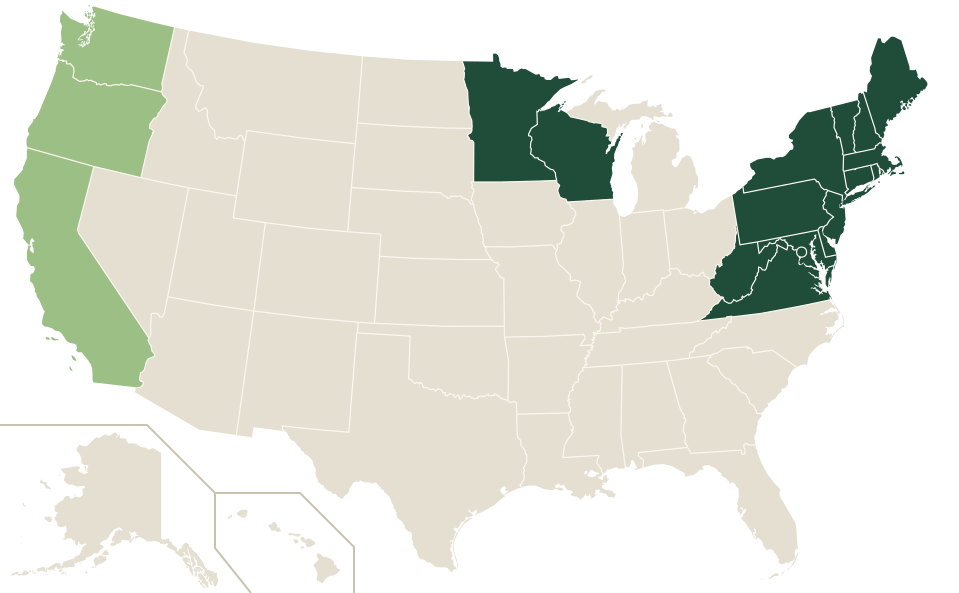
Reading maps carefully: cases are reported by where people live, not necessarily where they were infected, so a few cases appear in states with little local risk.
An expanding range
CDC’s case maps for 1995, 2010 and 2023 show that the range of Lyme disease in the United States has expanded significantly. More than 80,000 cases are now reported to CDC each year.
When are ticks most active?
Most cases are reported in summer, but Lyme disease occurs year-round. In the eastern US:
- Nymphs are actively seeking hosts from April through July – the highest-risk period.
- Adults are most active in early spring and fall.
- Blacklegged ticks can be active and bite any time winter temperatures are above freezing.
Travel and local risk
If you live in or visit a high-risk area, take prevention steps seriously during warm months, including in your own backyard – many people are exposed close to home, not just in wooded or rural areas. Your state or county health department is typically the best source of information about tick-borne diseases in your area.
Common questions
Which states have the most Lyme disease?
As of 2022, CDC’s high-incidence jurisdictions are Connecticut, Delaware, the District of Columbia, Maine, Maryland, Massachusetts, Minnesota, New Hampshire, New Jersey, New York, Pennsylvania, Rhode Island, Vermont, Virginia, West Virginia and Wisconsin.
What months are ticks most active?
In the eastern US, blacklegged tick nymphs are most active from April through July, and adults are most active in early spring and fall. Ticks can bite any time winter temperatures are above freezing.
Sources
This page is for general education and is not medical advice. Talk to a healthcare professional (or your veterinarian, for pets) about your situation.